
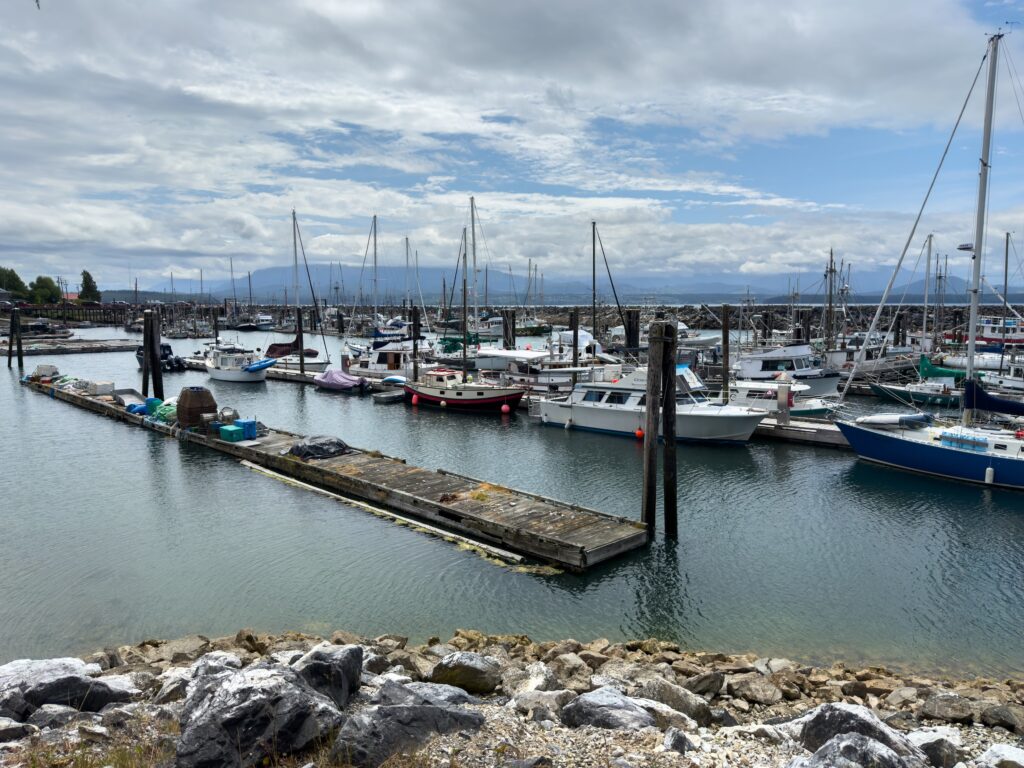
Creating a livelihood on Malcolm Island
When Finnish settlers arrived on Malcolm Island in 1901, they faced the challenge of creating an economy in a remote and largely undeveloped environment. Many of the first settlers had previously worked in the coal mines of Nanaimo and other industrial communities on Vancouver Island. Their experiences with difficult working conditions and labour disputes influenced their decision to establish a cooperative settlement where they could create a different way of life.
The early economy of Sointula was based on the resources available on the island: forests, farmland, and surrounding waters. The settlers planned to support themselves through a combination of agriculture, forestry, fishing, and shared production. The first years required extensive physical labour. Forest had to be cleared, homes and community buildings constructed, and systems for food production and trade established.
The cooperative structure of the original settlement meant that much of this work was organised collectively. Residents worked together to build roads, operate shared facilities, and develop industries that could provide income for the community. However, the practical difficulties of establishing an economy on an isolated island were significant. Limited capital, transportation challenges, and the difficulty of developing profitable industries contributed to the eventual collapse of the Kalevan Kansa cooperative in 1905. Despite the failure of the original economic experiment, the settlement survived. Many residents remained on Malcolm Island and have adapted their approach. Instead of a fully collective economy, Sointula developed into a community where privately operated businesses existed alongside cooperative institutions and community-based organisations.
Agriculture: Supporting the Community
Agriculture was one of the original pillars of the Sointula settlement. The first residents cleared forested areas to create gardens, fields, and pastureland. Farming was intended not only to provide food for the community but also to become one of the foundations of the cooperative economy. The reality of farming on Malcolm Island was difficult. Much of the land required extensive clearing before it could be cultivated, and the island’s climate, terrain, and limited agricultural areas restricted large-scale farming. As a result, agriculture remained primarily a household activity rather than becoming a major commercial industry.
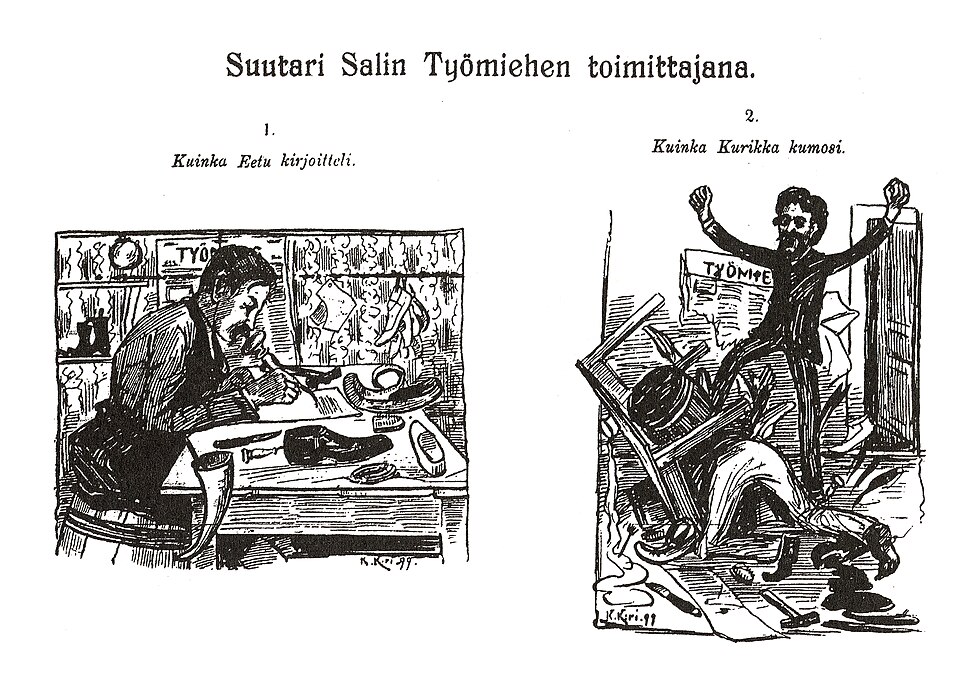
Many families maintained gardens, grew vegetables, kept livestock, and produced food for their own use. These activities were important for reducing dependence on imported goods, particularly during periods when transportation to the island was limited or expensive. Although farming never became the dominant source of income that the original settlers had hoped for, it remained an important part of daily life. Gardens, small farms, and food production contributed to household independence and supported the community alongside fishing and forestry.
Forestry and the Use of Island Resources
Forestry was central to the early development of Sointula. The island’s forests provided the materials needed to build homes, boats, roads, and community buildings. Timber was also one of the first resources settlers hoped could generate income. During the early twentieth century, logging provided employment for many residents. Timber work included cutting, transporting, and processing wood, as well as related trades such as construction and boatbuilding. The skills developed through forestry supported other industries and helped establish a practical economy on the island.
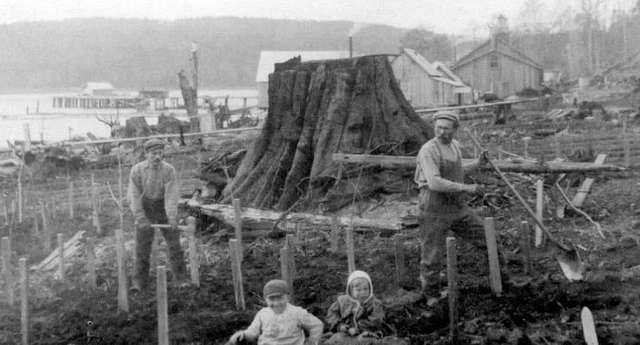
However, forestry faced limitations. The most accessible timber was gradually harvested, and changes in the industry reduced the number of local jobs available. Increasing mechanisation meant that fewer workers were needed, while larger forestry operations became concentrated elsewhere in British Columbia. Although forestry became less dominant over time, it continued to influence Sointula’s development. Many homes, boats, and local structures were built using materials and skills connected to the industry.
Fishing: The Foundation of Sointula’s Economy
Fishing eventually became the most important economic activity in Sointula. The island’s location near the waters of Queen Charlotte Strait, Johnstone Strait, and surrounding coastal fishing grounds provided residents with access to valuable marine resources.
Commercial fishing developed gradually during the twentieth century. Many Sointula residents became independent fishermen, operating their own boats and building businesses around the industry. Salmon was the most significant fishery, although fishermen also harvested species such as halibut, herring, and other marine resources. Fishing not only shaped the local economy, but it also influenced family life, seasonal routines, skills, and community relationships. Fishing was often a family enterprise, with different generations contributing to boat operations, equipment maintenance, and shore-based work. The industry additionally supported other local businesses. Boat repair, fuel services, marine supplies, transportation, and mechanical work all depended on the success of the fishing fleet. The harbour became an important centre of economic activity, connecting Sointula to wider coastal markets.
The Fishing Boom
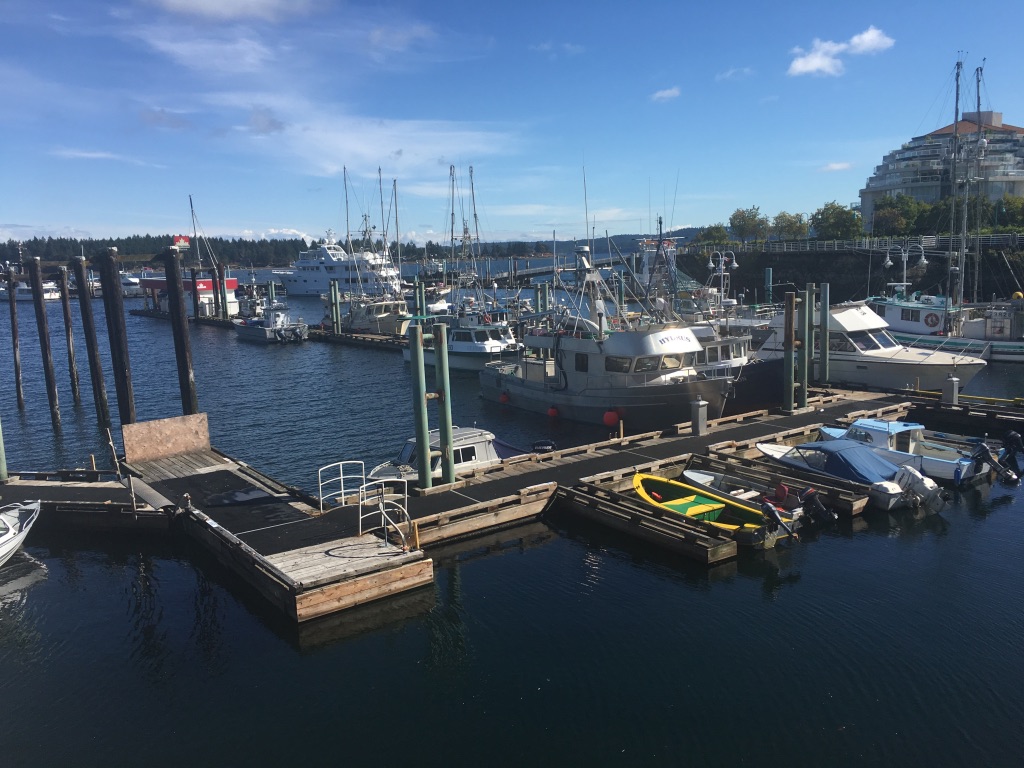
The middle and late twentieth century brought a period of prosperity for many commercial fishing communities in British Columbia. During the 1970s and 1980s, strong salmon catches and favourable market conditions created significant opportunities for fishermen.In Sointula, successful fishing seasons allowed some residents to invest in larger boats, improved equipment, and new technology. The income generated by fishing supported local businesses and contributed to a period of economic stability.
However, commercial fishing was always dependent on factors beyond the control of individual fishermen. Fish populations, weather conditions, fuel costs, regulations, and international markets all affected the industry. The prosperity of this period also encouraged investment in fishing capacity. When conditions later changed, many fishermen faced increasing financial pressure as operating costs rose and opportunities declined.
Changes in the Fishing Industry
From the late twentieth century onward, Sointula’s fishing economy faced major changes. Declining salmon stocks, changes in fisheries management, rising costs, and increased competition in global seafood markets affected commercial fishermen throughout British Columbia. The growth of salmon aquaculture also changed the seafood industry. Farmed salmon production increased the global supply of salmon and affected the market conditions faced by wild salmon fishermen.
Government programs aimed at reducing fishing capacity also changed the structure of the industry. Licence reductions and changes in access to fisheries contributed to fewer active commercial fishing operations in many coastal communities. For Sointula, these changes meant that fishing remained important culturally and economically, but it no longer supported the same proportion of the population as it had during the industry’s peak.
Cooperation and Community-Based Work
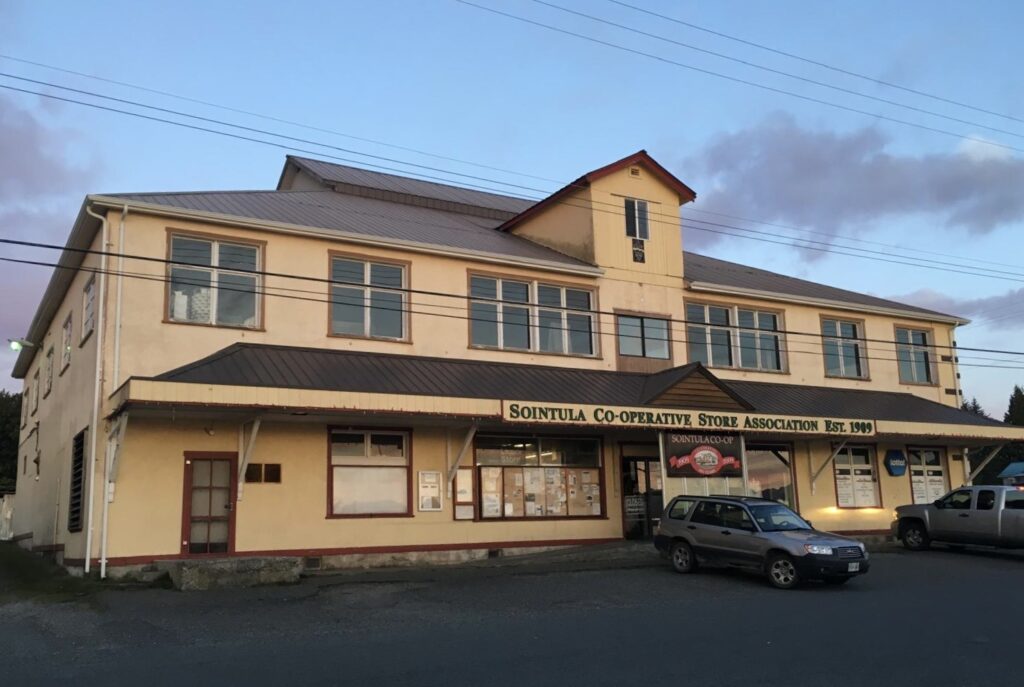
Although Sointula’s original cooperative economy ended in 1905, cooperation remained an important part of community life.
The Sointula Co-operative Store, established in 1909, became one of the most enduring examples of this tradition. The store provided residents with access to essential goods and services in a remote location and continues to operate today.
Other organisations have also relied on volunteer participation. Community groups, local associations, and volunteer-run services continue to contribute to everyday life on Malcolm Island. The Sointula Thrift Store, operated by volunteers, is one example of a community initiative that provides a local service while supporting the wider community.
Tourism and the Modern Economy
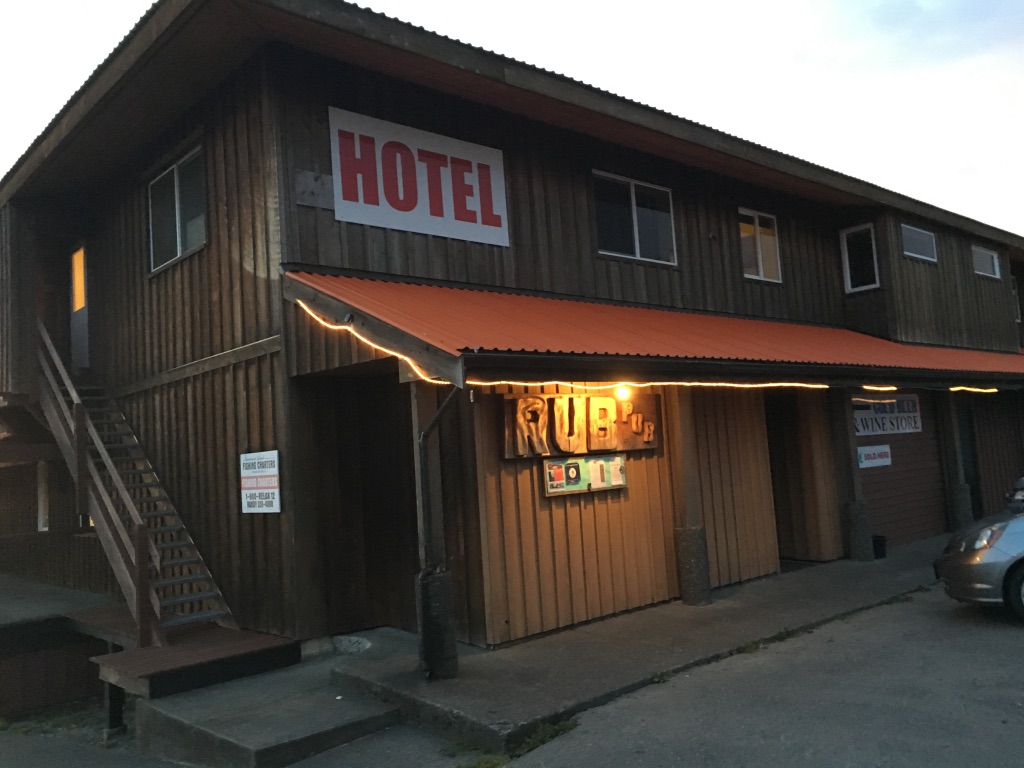
As traditional industries declined, tourism and small businesses became increasingly important parts of Sointula’s economy. Visitors are attracted to Malcolm Island because of its Finnish heritage, natural environment, wildlife, and outdoor activities. The Sointula Museum preserves and shares the history of the community, while local accommodations, restaurants, and visitor services support tourism. Tourism does not replace the economic importance once provided by fishing and forestry, but it has become one of the ways Sointula continues to adapt. The island’s remote location, which once created economic challenges, has also become part of its appeal for visitors seeking a quieter coastal experience. Today, Sointula’s economy reflects more than a century of adaptation. The community has moved through several economic phases, from a cooperative settlement, to a resource-based economy, to a more diverse mix of fishing, services, tourism, and small enterprise.
Read More:
Kevin Michael Wilson. Setting the Standard: How a Four Year Utopian Experiment Established a Six Decade Communal Norm in Sointula, British Columbia (University of Victoria, 2006).
Paula Wild. Sointula: Island Utopia (Harbour Publishing, 1995).
Sointula Museum & Historical Society — information on Sointula’s history, Finnish settlement, industries, and community life.
https://sointulamuseum.ca/
University of Victoria. Finnish/Canadian Community History Project: Sointula Museum Project.
https://maltwood.uvic.ca/cura/projects/finnish_canadian/home.html
The Canadian Encyclopedia — Sointula
(Useful overview of the settlement’s founding, Finnish immigration, and historical development.)
Fisheries and Oceans Canada. Commercial Fisheries / Pacific Salmon Fisheries information.
https://www.dfo-mpo.gc.ca/
Pacific Salmon Foundation. The Evolution of Commercial Salmon Fisheries in British Columbia.
https://psf.ca/
Government of British Columbia. Malcolm Island Landscape Unit Plan.
https://www2.gov.bc.ca/
Government of British Columbia. Central Coast Land and Resource Management Plan — Socio-Economic Base Case.
https://www2.gov.bc.ca/
Co-operative Retailing System — About Co-ops
(For background on the cooperative tradition and the role of the Sointula Co-operative Store.)
https://www.sointularecreation.com